
Online static training · for freedivers anywhere
Hold Still
the art of doing nothing, well
Three live online workshops and a personal 6-week plan. Not tolerance training: training the nervous system to stay calm while the signals build.
A “Pay now” button goes here once the cohort is confirmed.

What’s different
Most freedivers know the tables. Hold Still changes how and why they’re used. We don’t train tolerance of CO₂ or low oxygen. We train the nervous system’s “preamp” to stay turned down while the signals build: CO₂, falling oxygen, a full stretched lung, and the background load of everything else in a diver’s life.
Every session is dosed (intensity, frequency, volume) so you stay regulated, and every calm hold teaches the nervous system that it’s safe. That’s what carries into every hold, in training and in competition.
What you get
- Three live workshops online, about 75 minutes each, with practicals
- A personal 6-week plan, dosed to what your nervous system can take
- A daily readiness check that adjusts the session to your stress and sleep
- Recordings of every workshop
Who it’s for
Beginner to intermediate freedivers, including those who have never trained static. The same skills make depth and dynamic calmer too.
Safety first
Workshop holds are sub-maximal, seated or lying down. No breath-holds in water without a trained buddy watching.
Six weeks, three phases
Restoration
Settle the system: sleep, load, gentle CO₂ work.
Regulation
Stay calm as the signals build, across all three kinds of training.
Resilience
Take that calm past your PB: in training, or at a competition.
The 3Rs are Martin McPhilimey’s framework, from Breath Resilience Instructor Training (School of Breath Science).
The workshops
Workshop 1
Adaptation
What adapts, and how: adapting the signals (the body’s physiology) versus adapting the preamp (the nervous system).
Workshop 2
Training principles
The 3R framework. Preparing the nervous system: the art of letting go and other routines, stretching, breathing mechanics and awareness.
Workshop 3
Training and evaluating
The training itself, dosed to stay regulated, and how to evaluate it: readiness, what each session tells you, and when to progress.
Your coaches
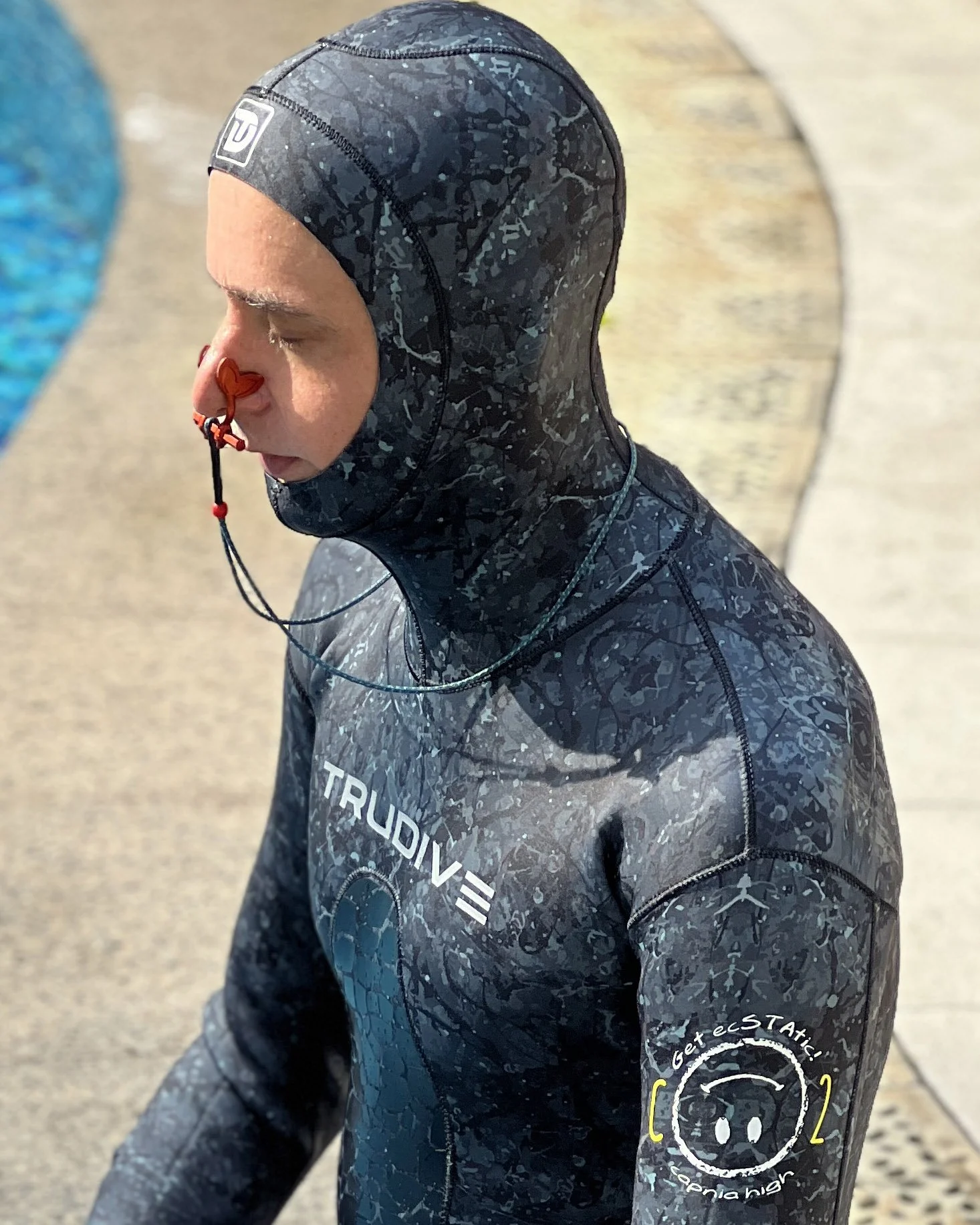
Tom Way
UK national record, 8:31 static (AIDA, Indonesia National Championship, December 2025), 9:00 in training. Co-organiser of the Singapore Pool Freediving Open 2026.
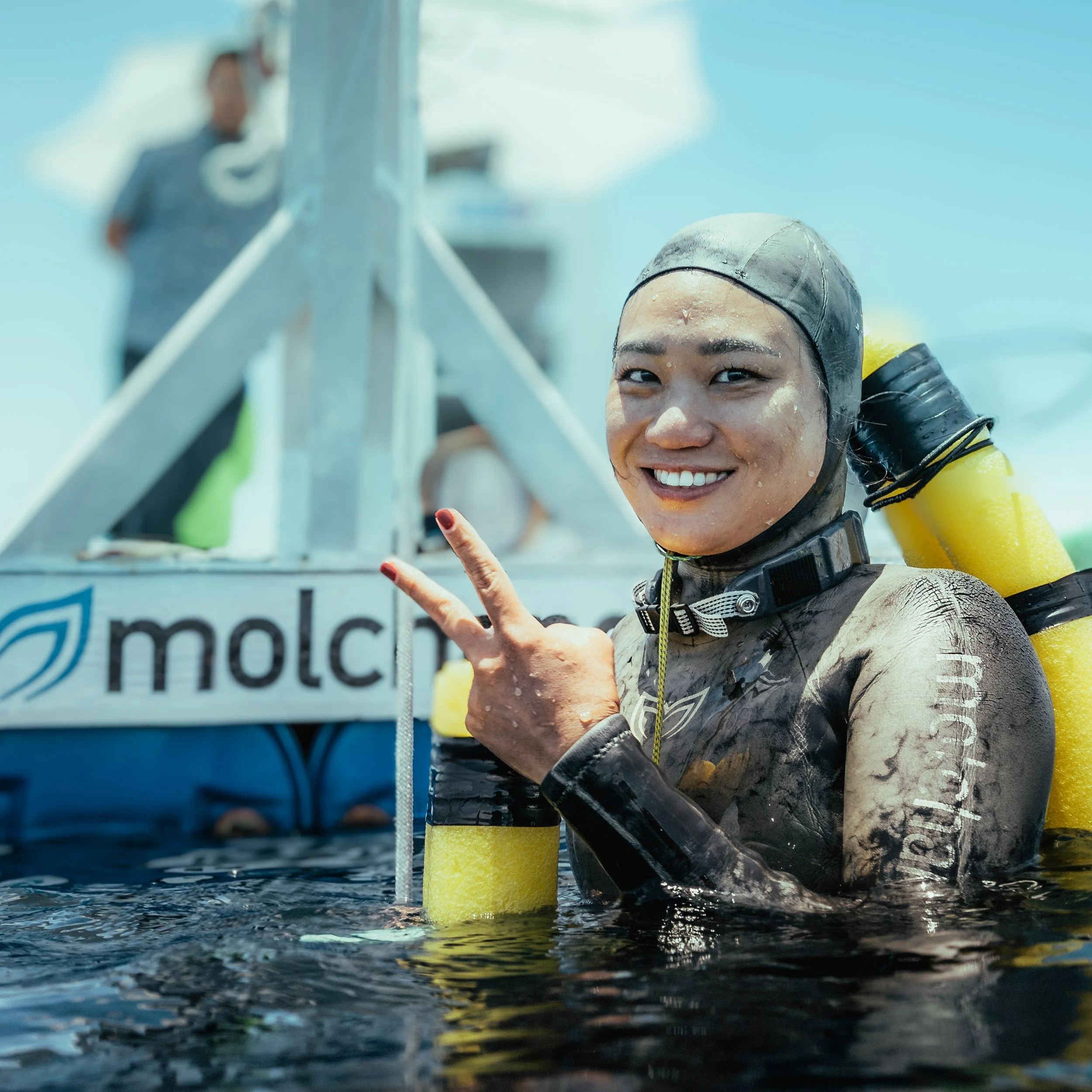
Pat Ong
Has set Singapore’s women’s national record in all eight AIDA disciplines, including a 7:06 static. Founder of Freedive with Pat and PFI instructor.
Both are in the founding cohort of Breath Resilience Instructor Training (School of Breath Science).
From the first cohort
Quote 1 to come. From an Apnea 42 participant, with permission: how the six weeks felt. Not a results claim.
Quote 2 to come. From an Apnea 42 participant, with permission: how the six weeks felt. Not a results claim.
Quote 3 to come. From an Apnea 42 participant, with permission: how the six weeks felt. Not a results claim.
For clubs
Run a Hold Still cohort for your members. We agree the dates with you, and if your club has a competition or pool session coming up, the plan builds towards it. Your club runs its own pool sessions and safeties. Runs from 4 people, best with 6–8.
Ask about a club cohortQuestions
Do I need a pool?
The workshop holds are dry: sub-maximal, seated or lying down. Your plan has dry sessions you can do at home, and in-water sessions for your club’s pool nights. Never hold your breath in water without a trained buddy watching.
What if I miss a workshop?
Every workshop is recorded, so you can catch up before the next one.
What time are the workshops?
Evenings that suit South-East Asia: 8:30 pm Singapore, 7:30 pm Jakarta.
I’ve never trained static. Is it for me?
Yes. It’s for beginner to intermediate freedivers, including people who have never trained static. The same skills make depth and dynamic calmer too.
Is it proven?
The parts are well established: the urge to breathe is the brain reading several signals at once (Moosavi et al., 2003), and everyday stress adds to the load the nervous system carries (McEwen, 1998). Hold Still puts them together, and it hasn’t been through a trial itself. So we don’t promise a number. We do promise every session is dosed so you stay regulated.
Register your interest
Leave your details and we’ll send the dates as soon as the next cohort is set. Tell us your current static PB and your club, if you have one.